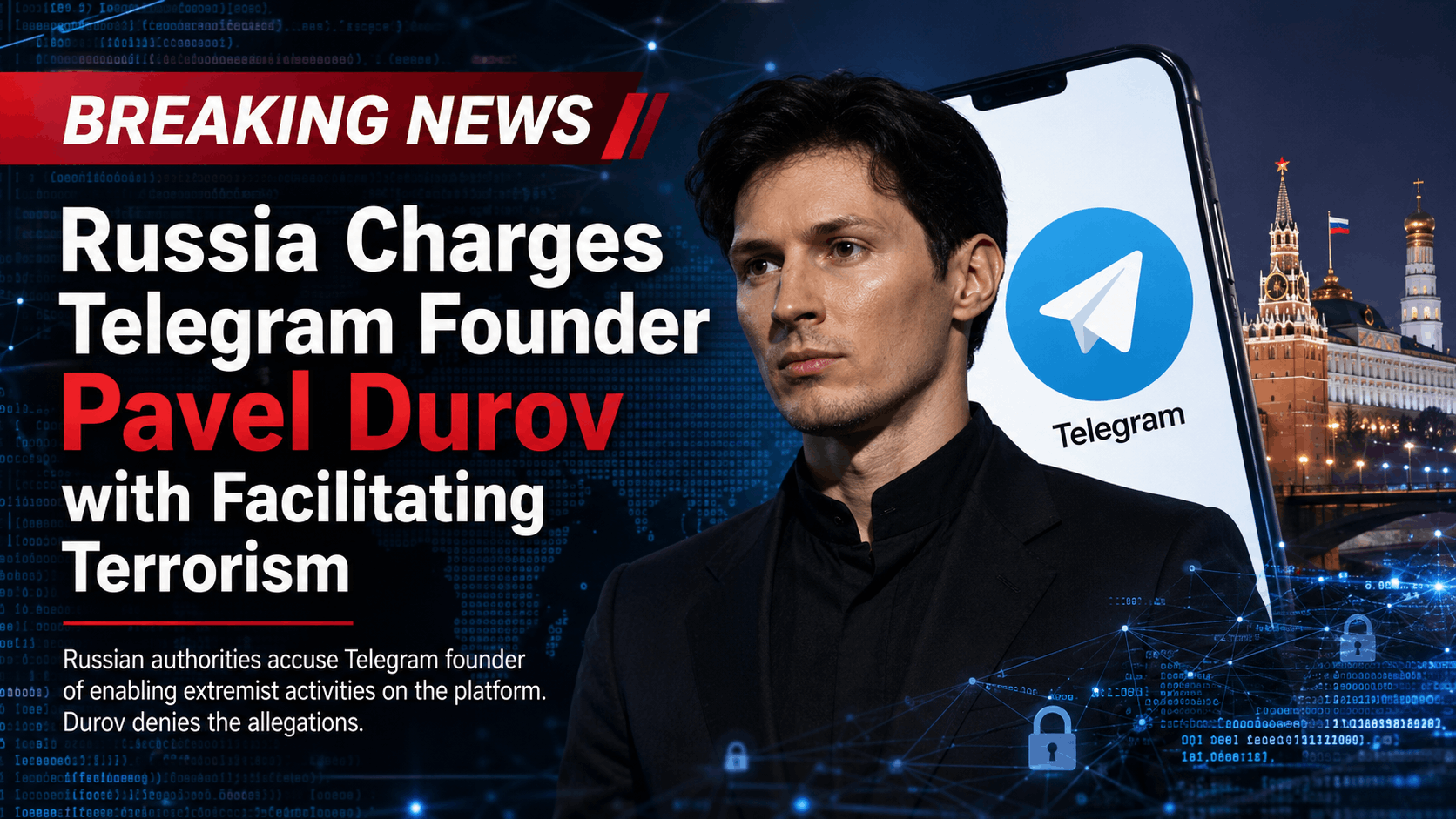
Russia Charges Telegram Founder Pavel Durov with Facilitating Terrorism
Russia Files Terrorism-Related Charges Against Telegram Founder
Russian authorities have charged Telegram founder Pavel Durov with facilitating terrorism, alleging that the messaging platform was used by Ukrainian intelligence services to recruit individuals and coordinate acts of sabotage within Russia.
According to Russia's Federal Security Service (FSB), Telegram failed to remove channels, bots, and group chats that were allegedly used for planning terrorist activities. As part of the case, Russian authorities have also issued an international arrest warrant against Durov.
Telegram Responds
Following the announcement, Telegram's official account on X (formerly Twitter) shared an image of Pavel Durov making a gesture interpreted as criticism of Russian authorities. Durov has previously accused Russia of attempting to restrict access to Telegram by creating new legal justifications.
Who Is Pavel Durov?
Pavel Durov is a Russian-born entrepreneur and the founder of Telegram. He left Russia in 2014 after refusing government requests to remove opposition communities from his earlier social media platform, VKontakte (VK). He currently lives abroad and holds French and United Arab Emirates (UAE) citizenship.
Telegram's Global Popularity
Telegram has grown into one of the world's largest messaging platforms, serving around 950 million users globally. The app is widely recognized for its focus on privacy, cloud-based messaging, and encrypted communication features.
Despite its popularity, Telegram has faced criticism from governments and regulators over content moderation. Critics argue that the platform has sometimes been used to spread illegal content or coordinate criminal activities, while Telegram maintains that it actively works to improve moderation while protecting user privacy.
Previous Legal Challenges
This is not the first time Pavel Durov has faced legal scrutiny. In 2024, French authorities placed him under formal investigation over allegations that Telegram did not do enough to prevent criminal misuse of the platform. He was later allowed to leave France while the investigation continued.
What Happens Next?
It remains uncertain whether countries outside Russia will enforce the international arrest warrant. Legal experts note that such warrants often depend on international agreements and the domestic laws of individual countries.
The case adds another chapter to the ongoing debate over the responsibilities of messaging platforms, balancing user privacy with efforts to combat illegal activities and terrorism.